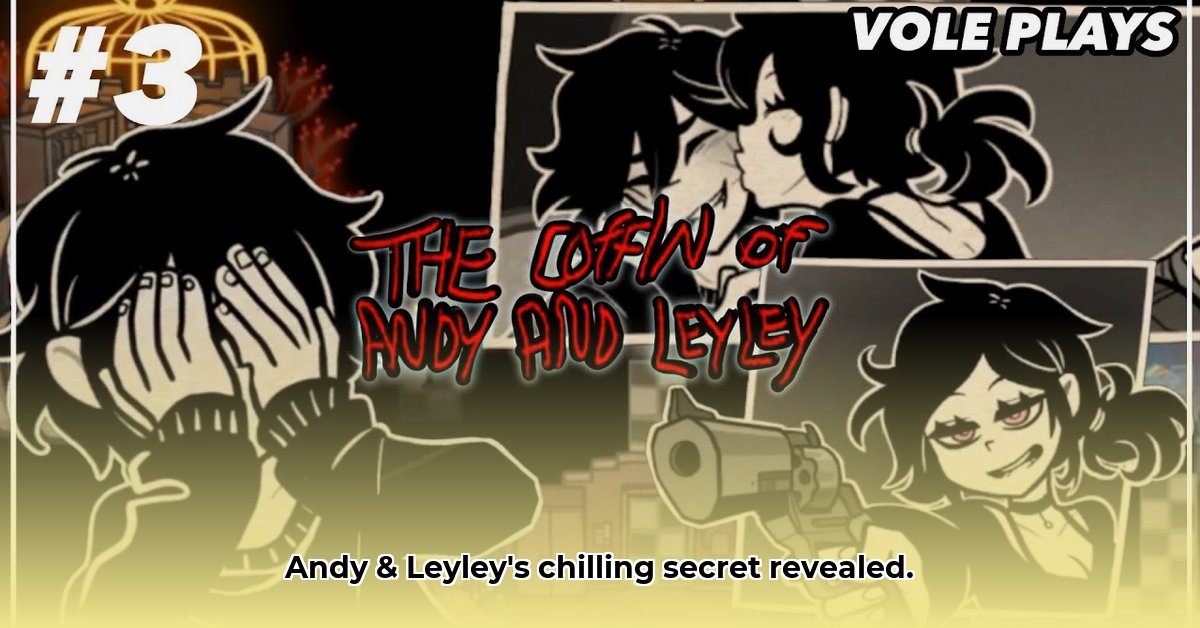
Andrew Graves, the protagonist of The Coffin of Andy and Leyley, is not your typical horror hero. He's a flawed, relatable figure trapped in a decaying apartment building alongside his manipulative sister, Ashley. This narrative analysis explores Andrew's complex character arc, examining his motivations, the impact of player choices on his destiny, and his significance within the horror genre. We will delve into his psychological state, unpack the game's "grime soul" versus "tar soul" dichotomy, and analyze the multiple narrative outcomes shaped by player agency.
Andrew's Initial State: Trapped in Decay
We first encounter Andrew in a crumbling apartment building—a physical manifestation of the decaying relationship with his sister. Their bond is fraught with codependency and manipulation, setting the stage for the psychological horror to come. His initial passivity in the face of escalating terror is striking. Is this an inherent trait, a learned coping mechanism, or a symptom of underlying psychological distress? This ambiguity immediately establishes him as a complex and compelling character, unlike the typical action-oriented horror protagonist. Isn't it fascinating how this initial portrayal already lays the groundwork for a deeply nuanced character study?
Turning Points: Player Choice and Narrative Branches
Andrew's journey is far from linear. The game's branching narrative structure places the player directly in control of his trajectory. Crucial choices impact not only his immediate actions but also his relationship with Ashley and his ultimate fate. Does he side with Ashley's schemes, prioritizing short-term gains at the cost of his own morality? Does he actively resist her, embracing the uncertainty and danger that lie ahead? Or does he choose self-preservation, potentially sacrificing his relationship with his sister?
| Player Choice | Outcome | Impact on Andrew |
|---|---|---|
| Aid Ashley in her schemes | Temporary advantage, long-term ethical compromise | Increased internal conflict, guilt, and potential moral compromise. |
| Resist Ashley, seek alternative escape | Heightened peril, increased uncertainty | Demonstrates resilience and vulnerability, highlighting internal struggle. |
| Prioritize self-preservation, abandon Ashley | Uncertain survival for both siblings | Raises profound questions about his empathy and moral compass. |
This interactive element elevates Andrew beyond a passive character; he becomes a reflection of the player's moral choices and their consequences. A study of the different endings is not just a study of Andrew, but a study of the player's engagement with his moral dilemmas.
Psychological Analysis: A Fragile Psyche
Andrew's behavior suggests potential underlying psychological issues, though a definitive diagnosis remains speculative. His history within the game hints at a dysfunctional family dynamic and potential trauma. His passivity, codependency, and responses to traumatic events could potentially align with symptoms of depression, PTSD, or other conditions. However, it's crucial to acknowledge the limitations of armchair psychology and ground any analysis firmly within the observable in-game behaviors. Even without a clear diagnosis, his actions reveal a deeply troubled individual struggling to cope with immense pressure and a toxic environment.
The Grime Soul vs. Tar Soul: Internal Conflict
The game's central metaphor—"grime soul" versus "tar soul"—perfectly embodies Andrew's internal conflict. While Ashley embodies the consuming "tar soul" of darkness, Andrew clings to a "grime soul," a residual sense of morality amidst the overwhelming horror. This internal struggle, this tension between survival and conscience, forms the emotional core of his narrative. It raises fundamental questions about human resilience and the extent to which a person might compromise their morals in the face of unimaginable terror. This powerful dichotomy adds another layer of complexity to his character.
Multiple Endings and Interpretations
The Coffin of Andy and Leyley presents several distinct endings, each a direct result of player choices. These scenarios offer profoundly different interpretations of Andrew's fate, ranging from a morally compromised survivor to a completely broken victim. This ambiguity is not a flaw; it highlights the player's role in shaping Andrew’s narrative and emphasizes the weight of their decisions. His story isn't predetermined; it's a collaborative creation, a powerful testament to the player’s impact on the narrative.
Conclusion: Andrew Graves' Enduring Legacy
Andrew Graves transcends the typical horror protagonist. He's a complex, morally ambiguous character whose actions are inextricably linked to his environment, relationships, and the player’s choices. His story compels us to confront the blurred lines between victim and perpetrator, to contemplate the fragility of the human spirit under extreme pressure, and to consider the long-lasting impact of our choices – both within the game and in our own lives. His continued relevance in discussions of horror game narratives lies precisely in this compelling ambiguity, making him a character worthy of continued analysis and study.
⭐⭐⭐⭐☆ (4.8)
Download via Link 1
Download via Link 2
Last updated: Friday, May 23, 2025